TAK-653: the AMPA modulator that reached human trials
· 8 min read
TAK-653 is an investigational AMPA receptor potentiator that strengthens glutamate signalling while showing minimal agonist activity of its own in preclinical models [1]. This article reviews the published research record, from its mechanism to the preclinical findings in cells, rats and primates [1,2,3]. It then covers the healthy-volunteer studies of safety, pharmacokinetics and brain activity, the Phase 2 trial in major depressive disorder and the Phase 3 programme now under way [5,6,11,13].
How TAK-653 acts at the AMPA receptor
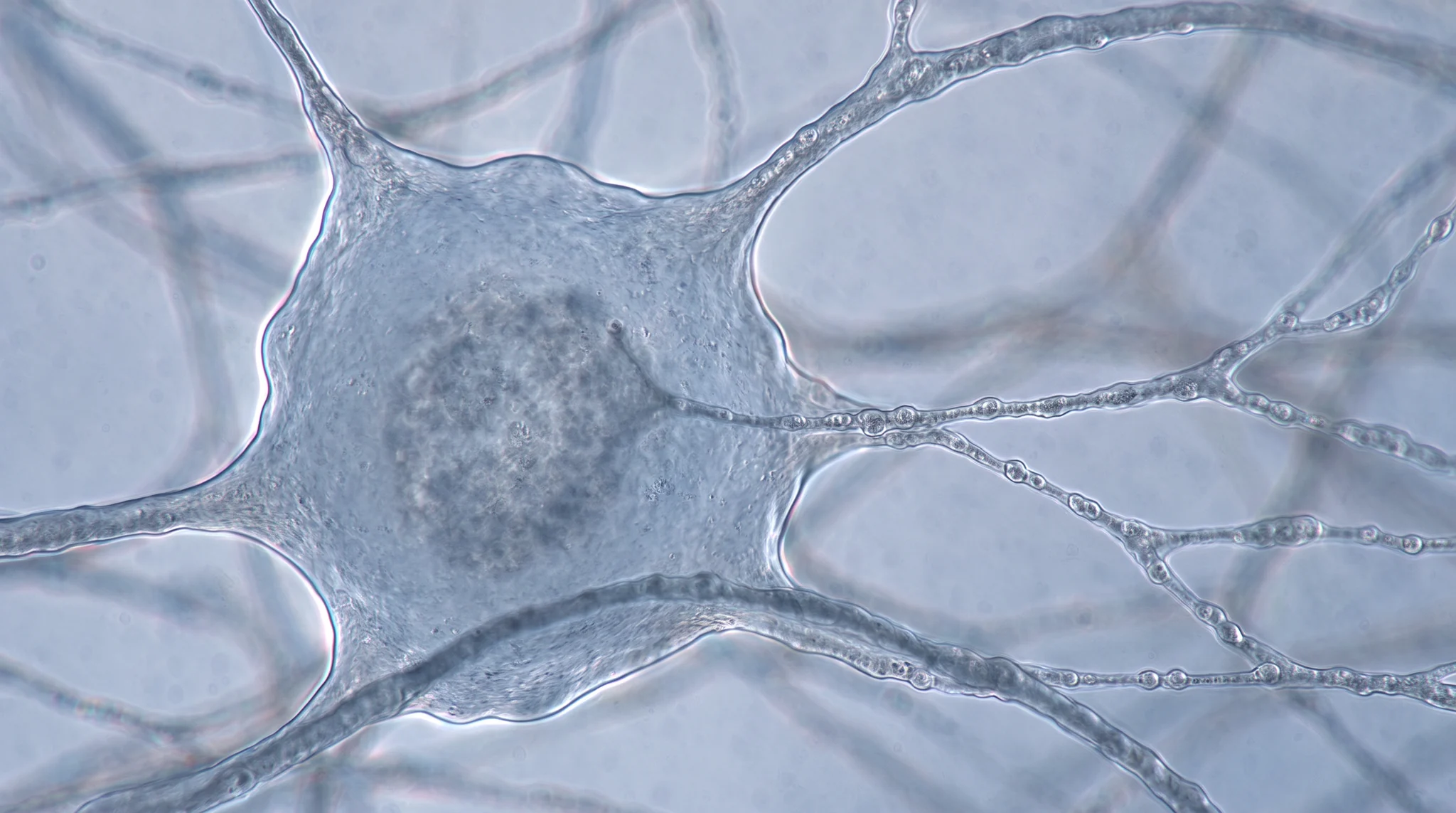
Glutamate is the main excitatory signalling molecule in the brain, and the AMPA receptor is one of the ion channels it opens [1]. When glutamate binds, the channel opens and lets positive ions, including calcium, into the neuron [1]. That brief current is the basic unit of fast excitatory transmission between neurons.
TAK-653 is a positive allosteric modulator, or potentiator, of this receptor [1]. "Allosteric" means it binds at a site away from the one glutamate uses. "Positive" means it strengthens the response when glutamate is present. In cell assays, TAK-653 bound the receptor's ligand binding domain only in a glutamate-dependent way [1].
The distinction that interested its developers is agonism. An agonist opens the channel by itself, whether or not glutamate has been released. The authors noted that agonist activity in AMPA potentiators may be associated with seizure risk and with bell-shaped dose-response curves [1]. TAK-653 was reported to have minimal agonist activity [1].
The Takeda team traced this to one contact point. In Chinese hamster ovary cells carrying the GluA1 subunit, TAK-653 potentiated glutamate-induced calcium influx through structural interference at serine 743 [1]. Without glutamate, it produced little current of its own in primary neurons [1]. The authors argued that strengthening receptors only when glutamate is actually released is what matters for synaptic signalling [1].
Put simply, there are two ways to make a synapse respond more strongly. One is to open receptors directly, at rest as well as during signalling. The other is to amplify only the signals that neurons already send. The Takeda work suggests that nonselective activation of resting receptors may work against synaptic and cognitive function, while amplifying released glutamate supports it [1]. That idea, rather than any single result, is what makes TAK-653 a useful research tool [1].

What the preclinical record reports

The first full characterisation appeared in Scientific Reports in 2021 [1]. In rat brain slices, TAK-653 enhanced electrically evoked AMPA receptor responses more potently than AMPA itself or LY451646, a comparator potentiator with marked agonist activity [1]. In behavioural tests of cognition, TAK-653 improved measures of both working memory and recognition memory [1]. LY451646 improved only recognition memory in the same work, and AMPA improved neither [1].
The same paper reported a wide margin between active exposure and convulsion in rats [1]. That margin was 419-fold for peak plasma concentration and 1,017-fold for total plasma exposure [1].
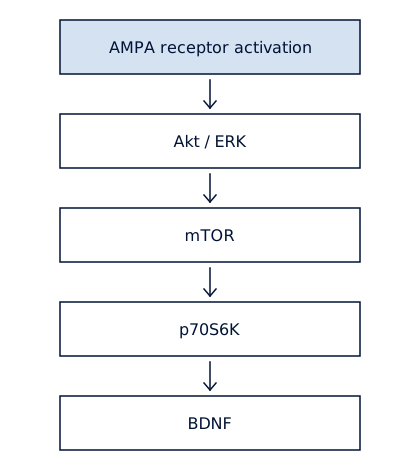
A second Takeda paper looked at signalling pathways linked to the rapid antidepressant-like effects of ketamine in research models [2]. In rat primary cortical neurons, TAK-653 increased the active forms of mTOR and p70S6 kinase, along with their upstream regulators Akt and ERK [2]. It also raised levels of brain-derived neurotrophic factor (BDNF), a protein involved in synaptic growth [2].

In the reduction of submissive behaviour model in rats, repeated exposure to TAK-653 produced an antidepressant-like effect [2]. Unlike ketamine, it did not increase locomotor activity, a behavioural sign researchers associate with ketamine's psychotomimetic effects [2]. A blocker of AMPA receptors prevented ketamine's effect in the same model, which the authors took as evidence that AMPA activation is central to it [2].
The work has since been extended to primates. In a 2025 study, monkeys exposed to twelve weeks of chronic unpredictable mild stress showed reduced food motivation, more huddling and less movement [3]. After a period of TAK-653 exposure, these behaviours moved back towards baseline, plasma cortisol and IL-6 fell, and BDNF rose [3]. AMPA receptors remain an active area of depression research, alongside the better-known work on NMDA receptors [4].
The first studies in healthy volunteers

TAK-653 entered human studies with a first-in-human trial in healthy participants, which ran from 2015 to 2017 [5]. It combined single and multiple rising levels against placebo and enrolled 88 people [5]. The posted registry results list no serious adverse events and no deaths [5].
The next question was whether the compound reached its target in the human brain. Takeda and the Centre for Human Drug Research in Leiden used transcranial magnetic stimulation (TMS) to find out [6]. TMS uses a magnetic pulse over the motor cortex to produce a small muscle response, the motor-evoked potential, which reflects how excitable the cortex is [6].
In rats, TAK-653 increased the muscle response to single TMS pulses [6]. In a placebo-controlled crossover study with 24 healthy volunteers, it increased motor-evoked potential amplitude at plasma concentrations similar to those in the rats [6]. It did not change the resting motor threshold or paired-pulse responses [6]. The authors described TMS as the first translational functional biomarker for AMPA receptor potentiation [6].
The same volunteers also completed the NeuroCart, a battery of computerised tests of eye movements, balance, attention and mood [7]. TAK-653 increased saccadic peak velocity and improved adaptive tracking, a test of visuomotor control [7]. It did not change body sway or self-rated drug effects [7]. The authors called this a psychostimulant-like profile, consistent with the increased cortical excitability seen with TMS [7]. The registry results for this study list no serious adverse events [8].
A later Neurocrine study in healthy adults looked at drug interactions through the liver enzyme CYP3A [9]. Repeated exposure to the compound did not meaningfully change blood levels of midazolam or of an ethinyl estradiol and levonorgestrel combination [9]. The authors concluded that NBI-1065845, the Neurocrine code for TAK-653, is not a CYP3A inducer, and they reported no new safety findings [9].

The Phase 2 programme and its outcome
Takeda's first planned Phase 2 study was registered for depression that had not responded to earlier antidepressants [10]. The design used each participant's earlier response to ketamine to sort them into groups before randomisation [10]. It was withdrawn before anyone enrolled, with the reason given as a business decision [10].
Development continued under Neurocrine Biosciences, which is listed as sponsor of the later studies [9,11]. The Phase 2 study in adults with major depressive disorder ran from February 2022 to February 2024 [11]. It was randomised and masked to participants, care providers, investigators and outcome assessors, and it enrolled 183 adults [11].
The primary measure was the change from baseline in the Montgomery and Åsberg Depression Rating Scale at day 28 [11]. The sponsor has reported that this measure was met at the lower of the two levels tested, and that the higher level did not reach statistical significance [12]. A 2026 review of the field summarises these reported outcomes [12]. At the time of writing, no results had been posted on the trial's registry entry and no full peer-reviewed paper had appeared [11].
That gap matters for researchers reading the record. The preclinical work and the brain-activity studies in volunteers are published in peer-reviewed journals [1,6,7], and the first-in-human results are posted on the trial registry [5]. The Phase 2 efficacy findings, so far, rest on sponsor reports summarised in reviews [12].
Where TAK-653 stands now
Neurocrine started its first Phase 3 study of NBI-1065845 in January 2025 [13]. Five Phase 3 studies are now recruiting adults with major depressive disorder, with the compound added to an existing antidepressant [13,14,15,16,17]. They include three studies of about 200 participants each [13,14,15]. A long-term study of about 850 participants focuses on safety and tolerability [16]. A study of about 550 participants is designed to test whether an effect is maintained over time [17].
For laboratory research, TAK-653 remains a useful tool for a specific question: what happens when AMPA receptor signalling is strengthened only when glutamate is released [1]. The preclinical record links that profile to synaptic and cognitive effects, with a wide margin against convulsion in rats [1]. Several questions remain open in the published work, including how the TMS and NeuroCart findings relate to the effects reported in Phase 2 [6,7,12].

WorldwideBioResearch supplies TAK-653 for laboratory research only. This article summarises the published research record only. It describes no use of the compound in people or animals.
References
- Suzuki A, Kunugi A, Tajima Y, et al. Strictly regulated agonist-dependent activation of AMPA-R is the key characteristic of TAK-653 for robust synaptic responses and cognitive improvement. Sci Rep. 2021;11:14532. doi:10.1038/s41598-021-93888-0 PMID: 34267258 PubMed
- Hara H, Suzuki A, Kunugi A, et al. TAK-653, an AMPA receptor potentiator with minimal agonistic activity, produces an antidepressant-like effect with a favorable safety profile in rats. Pharmacol Biochem Behav. 2021;211:173289. doi:10.1016/j.pbb.2021.173289 PMID: 34655652 PubMed
- Li L, Zhang Z, Liu X, et al. TAK-653 Reverses Core Depressive Symptoms in Chronic Stress-Induced Monkey Model. Biomedicines. 2025;13(6):1389. doi:10.3390/biomedicines13061389 PMID: 40564108 PubMed
- Freudenberg F, Reif-Leonhard C, Dawson GR, McKernan RM. All roads lead to glutamate: NMDA and AMPA receptors as targets for rapid-acting antidepressants. Pharmacol Res. 2025;220:107918. doi:10.1016/j.phrs.2025.107918 PMID: 40840695 PubMed
- ClinicalTrials.gov. NCT02561156: TAK-653 Escalating Single and Multiple Dose Study in Healthy Participants. https://clinicaltrials.gov/study/NCT02561156 Source
- O'Donnell P, Dijkstra FM, Damar U, et al. Transcranial magnetic stimulation as a translational biomarker for AMPA receptor modulation. Transl Psychiatry. 2021;11:325. doi:10.1038/s41398-021-01451-2 PMID: 34045439 PubMed
- Dijkstra F, O'Donnell P, Klaassen E, et al. Central nervous system effects of TAK-653, an investigational alpha-amino-3-hydroxy-5-methyl-4-isoxazole receptor (AMPAR) positive allosteric modulator in healthy volunteers. Transl Psychiatry. 2022;12:408. doi:10.1038/s41398-022-02148-w PMID: 36153330 PubMed
- ClinicalTrials.gov. NCT03792672: A Study to Evaluate Central Nervous System (CNS) Pharmacodynamic Activity of TAK-653 in Healthy Participants Using Transcranial Magnetic Stimulation (TMS). https://clinicaltrials.gov/study/NCT03792672 Source
- Lin S, Ionescu A, Maynard-Scott J, et al. Effects of the selective AMPA modulator NBI-1065845 on the pharmacokinetics of midazolam or ethinyl estradiol-levonorgestrel in healthy adults. Clin Transl Sci. 2024;17(5):e13791. doi:10.1111/cts.13791 PMID: 38700236 PubMed
- ClinicalTrials.gov. NCT03312894: Efficacy and Safety of TAK-653 in Treatment-Resistant Depression (withdrawn). https://clinicaltrials.gov/study/NCT03312894 Source
- ClinicalTrials.gov. NCT05203341: Study to Assess the Efficacy and Safety of NBI-1065845 in Adults With Major Depressive Disorder (MDD). https://clinicaltrials.gov/study/NCT05203341 Source
- King A, Hardy M, Rhee TG, Wilkinson ST. Next-Generation Pharmacotherapies for Unipolar Mood Disorders: A Leading Article on Phase II/III Drug Development Across Diverse Mechanisms. CNS Drugs. 2026;40(11):1429-1444. doi:10.1007/s40263-026-01330-8 PMID: 42645703 PubMed
- ClinicalTrials.gov. NCT06786624: Study to Assess the Efficacy and Safety of NBI-1065845 as an Adjunctive Treatment in Participants With MDD. https://clinicaltrials.gov/study/NCT06786624 Source
- ClinicalTrials.gov. NCT06911112: NBI-1065845-MDD3025, efficacy and safety as an adjunctive treatment in MDD. https://clinicaltrials.gov/study/NCT06911112 Source
- ClinicalTrials.gov. NCT06963021: NBI-1065845-MDD3026, efficacy and safety as an adjunctive treatment in MDD. https://clinicaltrials.gov/study/NCT06963021 Source
- ClinicalTrials.gov. NCT06966401: Long-Term Study to Assess the Safety and Tolerability of NBI-1065845 as an Adjunctive Treatment in MDD. https://clinicaltrials.gov/study/NCT06966401 Source
- ClinicalTrials.gov. NCT07196501: A Study to Evaluate the Maintenance Effect of NBI-1065845 as an Adjunctive Treatment in MDD. https://clinicaltrials.gov/study/NCT07196501 Source
Compounds in this article

For research purposes only. Not for human consumption. Not for veterinary use. This article describes published laboratory research and is not advice of any kind.